 Cookie preferences

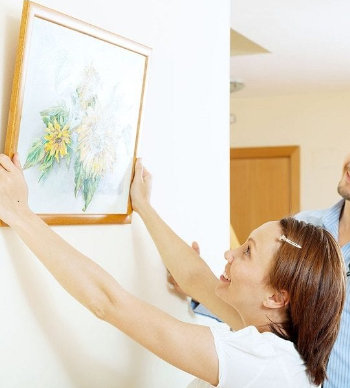

Hanging pictures and photos in style on the wall: how to achieve a modern wall decoration
The walls of the house, a magnificent space to decorate
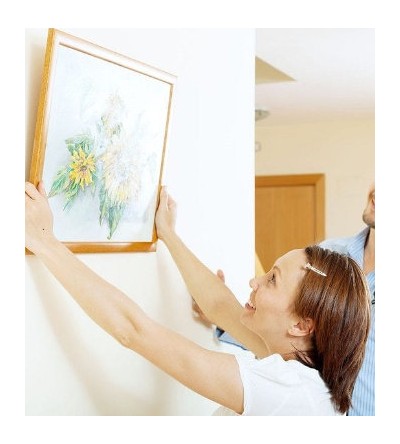
This guide shows you step-by-step what's important when hanging and combining pictures. You'll receive helpful planning tips, learn what tools you need, and discover creative ideas for harmonious and personalized wall decor.
What you'll find in this article:
- Plan your wall decor strategically: 9 practical tips
- What tools do you need to hang pictures?
- Mounting pictures correctly and securely
- Combining several pictures: What to pay attention to
- Popular hanging styles as inspiration for your gallery wall
Hanging pictures isn't rocket science: with a little preparation, it's as easy as painting a wall. Thinking about the arrangement, height, and proportions beforehand will create a functional and aesthetically pleasing wall decor.
________________________________________
Plan your wall decor: 9 valuable tips
1. Define the ambiance and style
Pictures significantly influence the atmosphere of a room. They can radiate tranquility, inspire, or evoke emotions. Therefore, first consider the effect you want your wall decor to have and how it harmonizes with your furniture, colors, and materials.
2. One piece or a group of pictures?
A large piece of art can serve as a focal point, while several smaller pictures together create an interesting unity. Consider the size of the room: in small rooms, large pieces can quickly become overwhelming, while individual pictures can easily get lost on large walls. Vertical arrangements visually lengthen a room, while horizontal ones make it appear wider.
3. Choose the right proportions
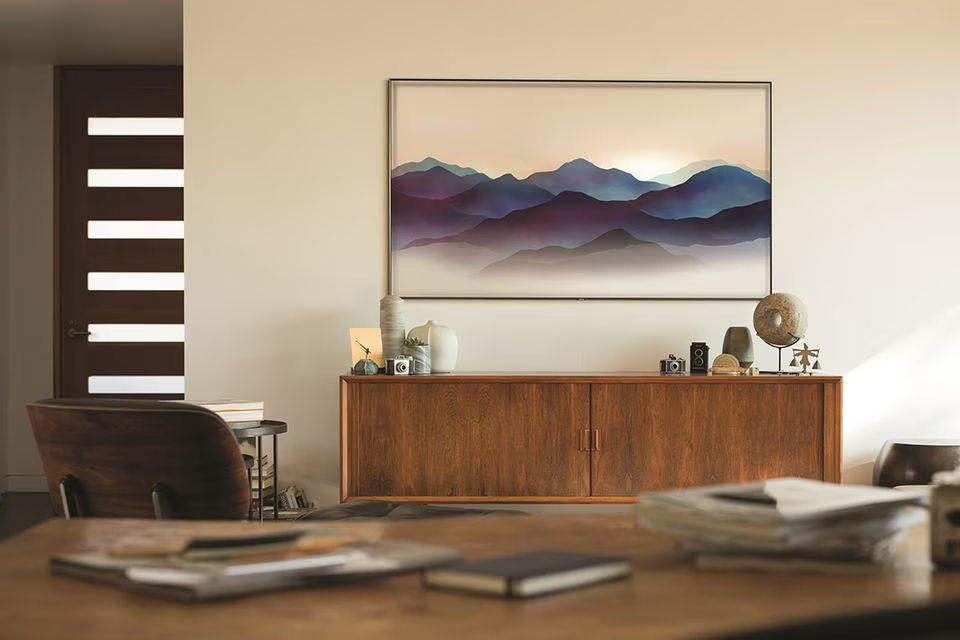
Pictures look best above furniture such as sofas, sideboards, or dressers. As a general rule, the width of the painting should be approximately two-thirds to a maximum of three-quarters the width of the furniture.
4. Find the optimal height
Large paintings look most harmonious when their center is slightly below eye level. When hanging multiple pictures above furniture, a distance of about 20 to 30 cm from the top edge is recommended. If the picture is primarily viewed from a seated position, adjust the height accordingly.
5. Use wall color intentionally.
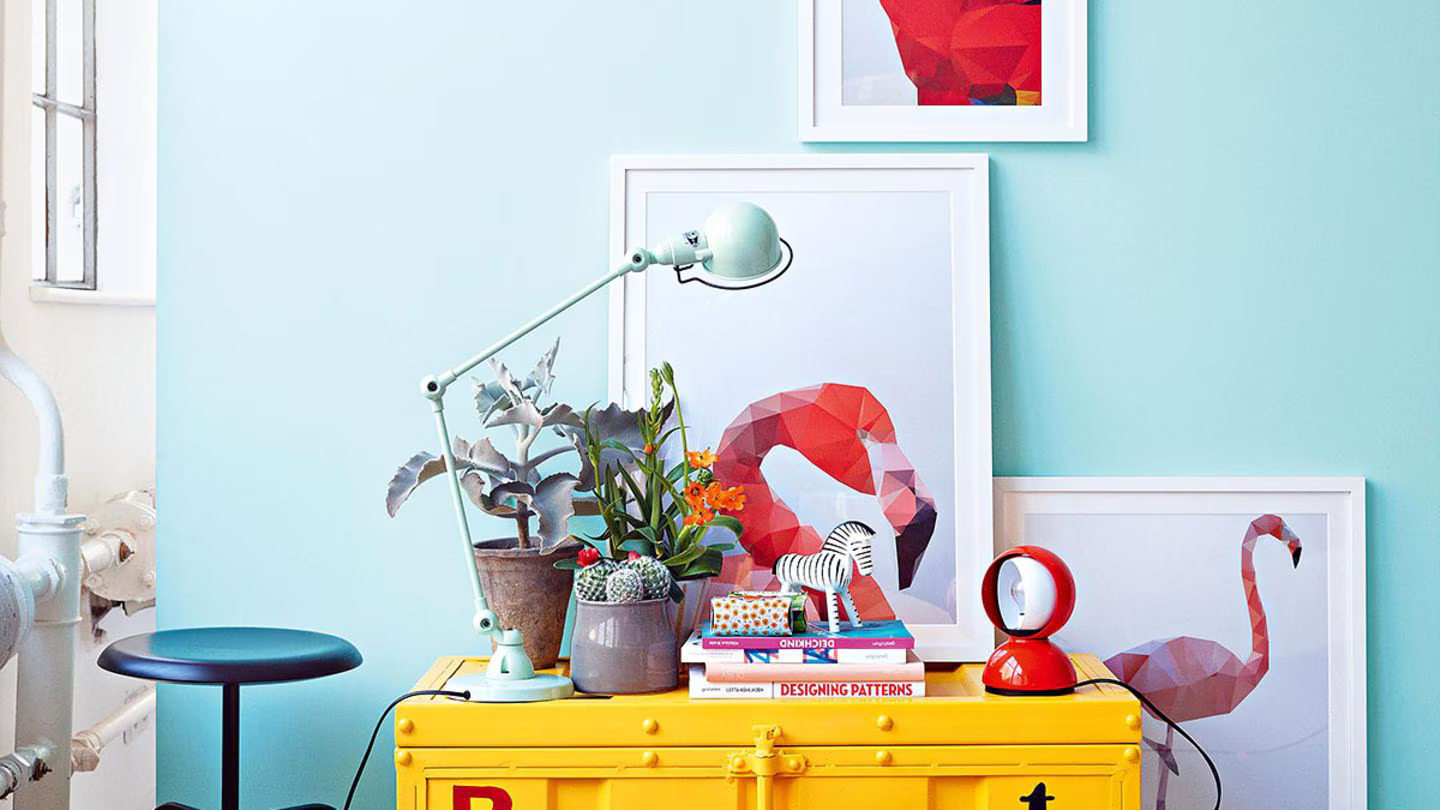
Light walls create a sense of calm, while colored surfaces can highlight individual motifs. If the wall color matches the picture, the arrangement will look particularly harmonious. For patterned wallpaper, a mat adds visual clarity.
6. Test the layout beforehand.
First, place several frames on the floor. Use masking tape to simulate the space before transferring the measurements to the wall; this will help you avoid unnecessary drilling.
7. Drill or wall anchors?
For heavy pictures, screws, nails, and wall plugs are the safest option. Lighter pictures can also be attached with adhesive nails or adhesive strips, which, depending on the product, can support up to two kilograms. Important: The wall surface must be clean and grease-free.
8. Be patient after a new installation
Pictures shouldn't be hung immediately on newly installed walls. Residual moisture in the walls can damage artwork. Wait until the walls are completely dry.
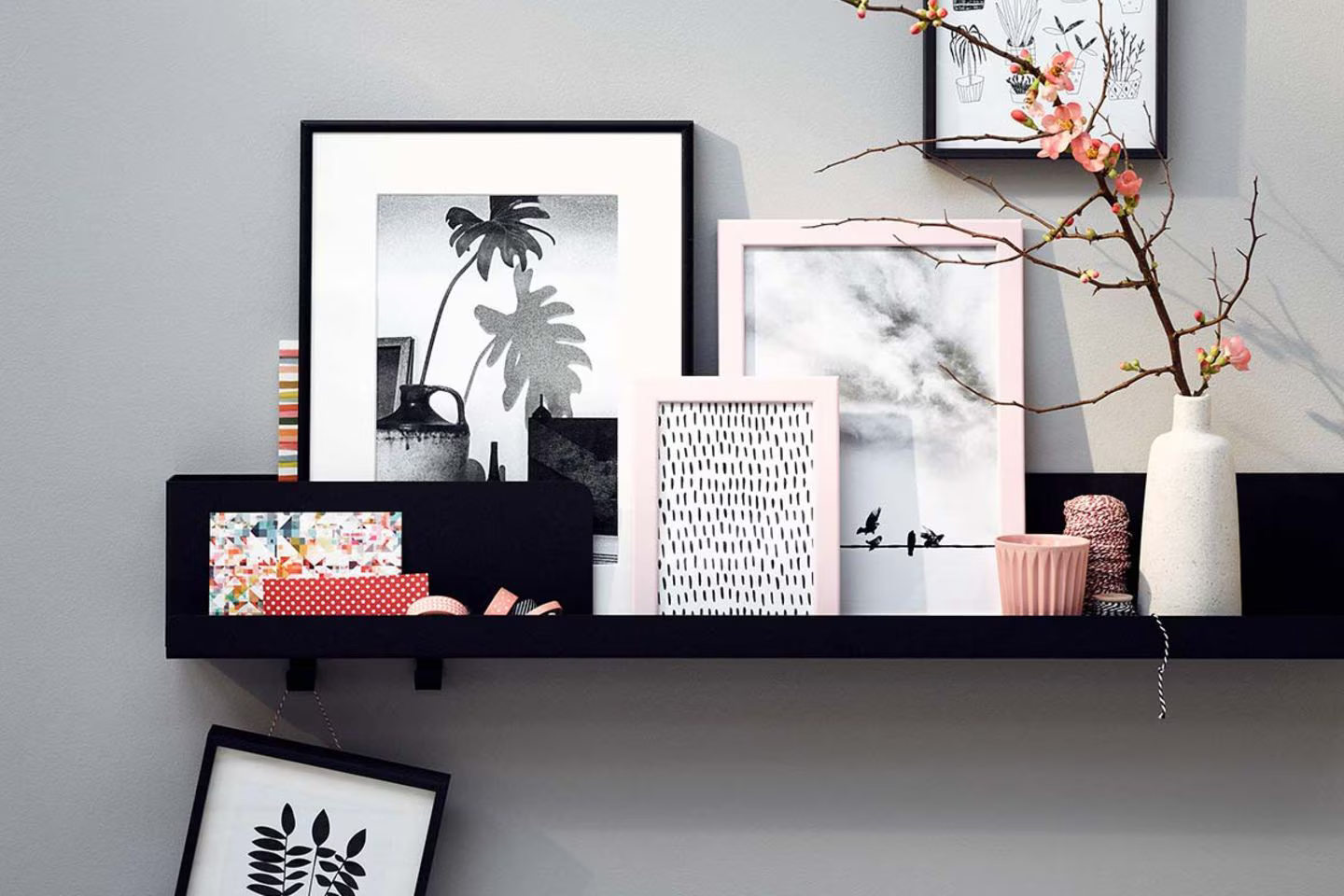
9. Picture rails for flexible wall decor
If you like to change your wall decor, picture rails are ideal. They allow you to quickly swap and combine pictures without drilling.
________________________________________
What tools do you need to hang pictures?
A hammer, nails, a spirit level, a stud finder, paper, scissors, and a pencil are all you need. Alternatively, you can use a line level or a level instead of a spirit level.
For large or heavy pictures, screws, wall plugs, and a suitable drill bit are recommended. As a general rule, the heavier the picture, the more secure the mounting should be. On porous walls, screws offer more support than nails. Also, check the composition of the wall: concrete usually requires a hammer drill, while brick or sandstone can be drilled with either a hammer drill or a cordless drill.
________________________________________
Hanging Multiple Pictures: Things to Consider
The human eye appreciates order and symmetry. For a harmonious grouping of pictures, at least three pieces are recommended, ideally with two identical sizes. Small spaces and clear alignment, for example, along an imaginary line, create a cohesive overall image.
It's helpful to define a horizontal or vertical axis to align the edges of the pictures. A larger or particularly striking image forms the centerpiece, with smaller frames grouped around it. This method allows you to easily expand the wall decor later.
________________________________________
Popular Picture Hanging Styles: Inspiration for Your Gallery Wall
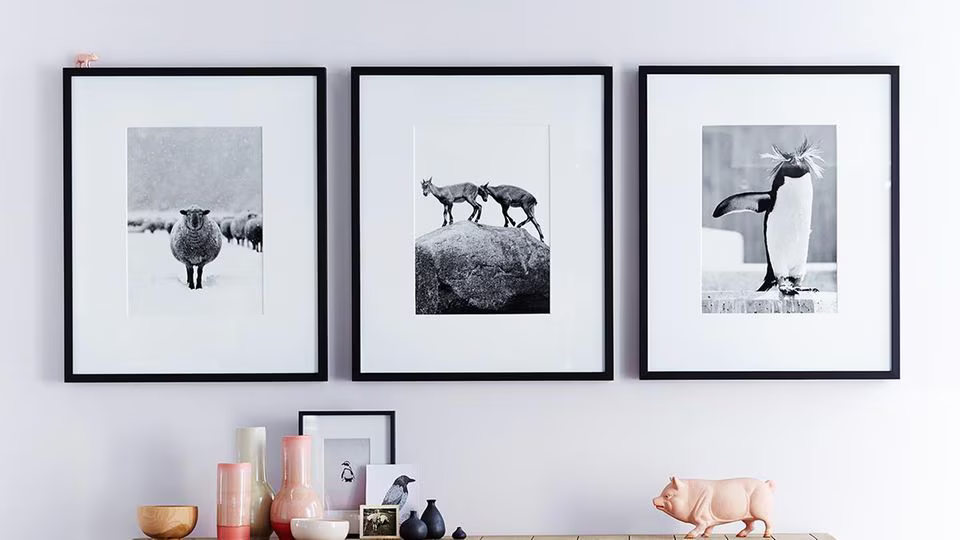
Hanging in a Horizontal Line
Timeless and classic: Pictures with the same frames and sizes are placed in a line. Long walls, such as those in hallways, particularly benefit from this arrangement. The ideal distance between pictures is about five centimeters.
Hanging Vertically
Unusual, but effective: Pictures hung vertically create focal points and add character to a room. Uniform frames, colors, and materials create a cohesive overall look.
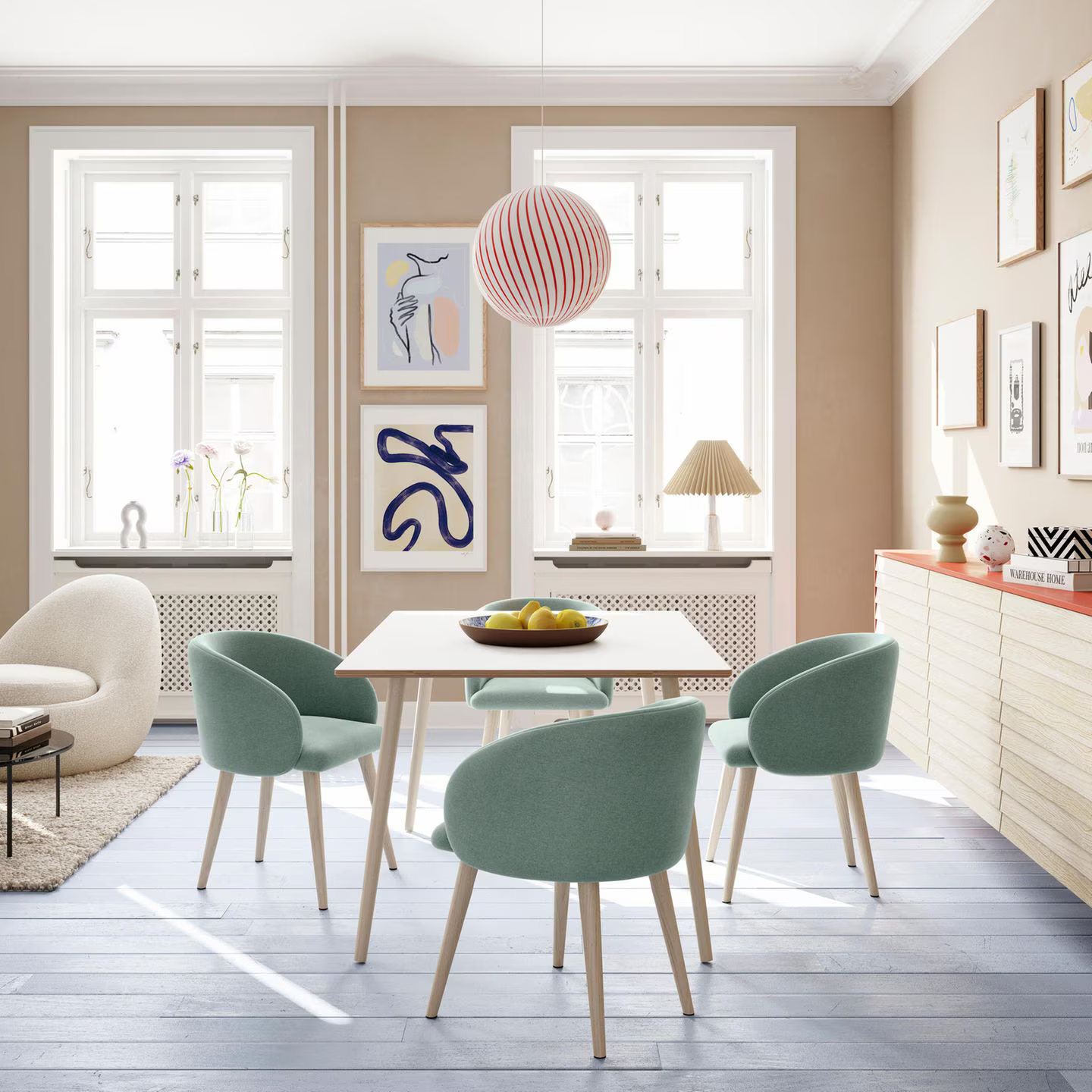
Hanging Along the Edge
In this style, all the pictures are aligned along an imaginary center or edge line. It's important to maintain a uniform distance between frames, although the horizontal and vertical spacing can vary.
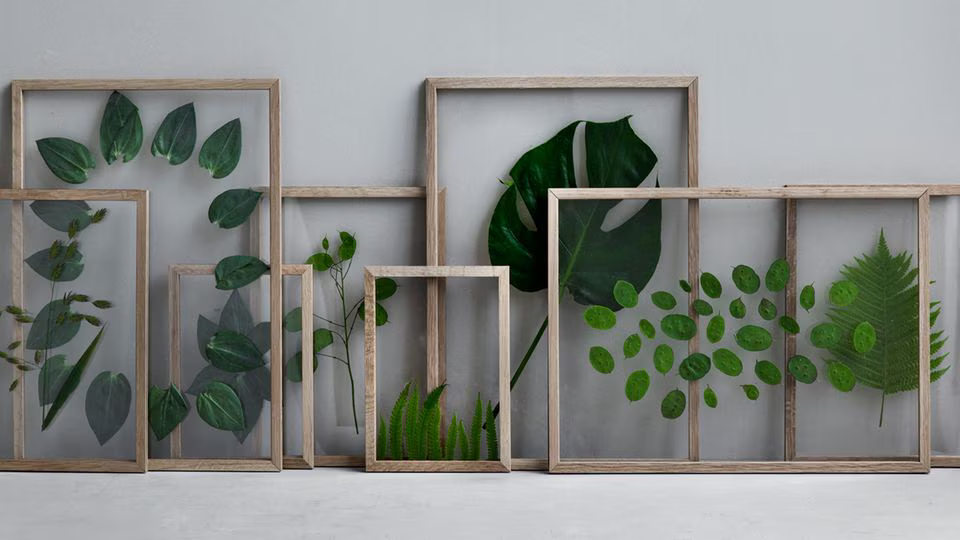
St. Petersburg Style (Hallside Hang)
Many pictures hung together, seemingly at random, yet harmonious. Uniform frames or mats create unity and serenity in this vibrant wall decor.
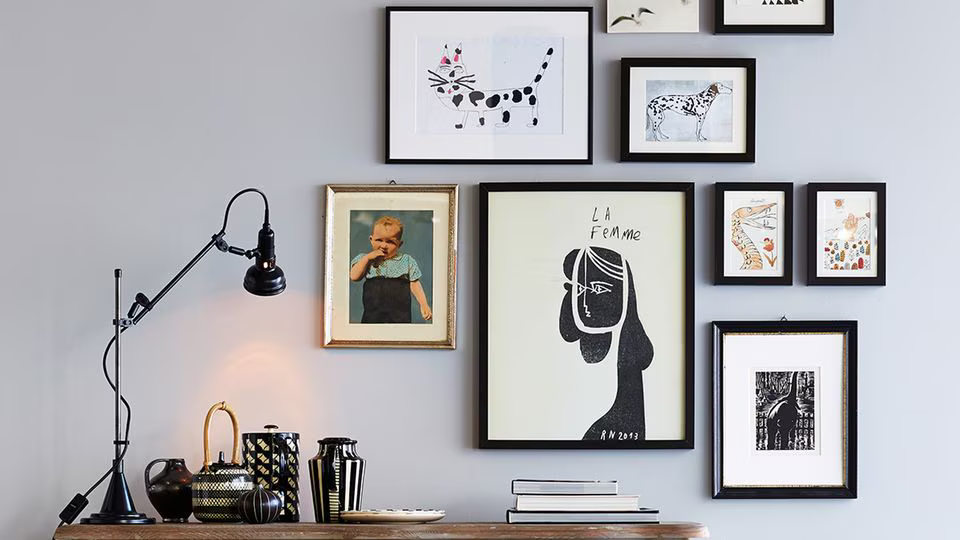
Hanging in a Corner
Ideal for rooms with awkward angles: Pictures span multiple walls and unfold their full effect when viewed from the corners. Series with similar motifs or perspectives are especially striking.
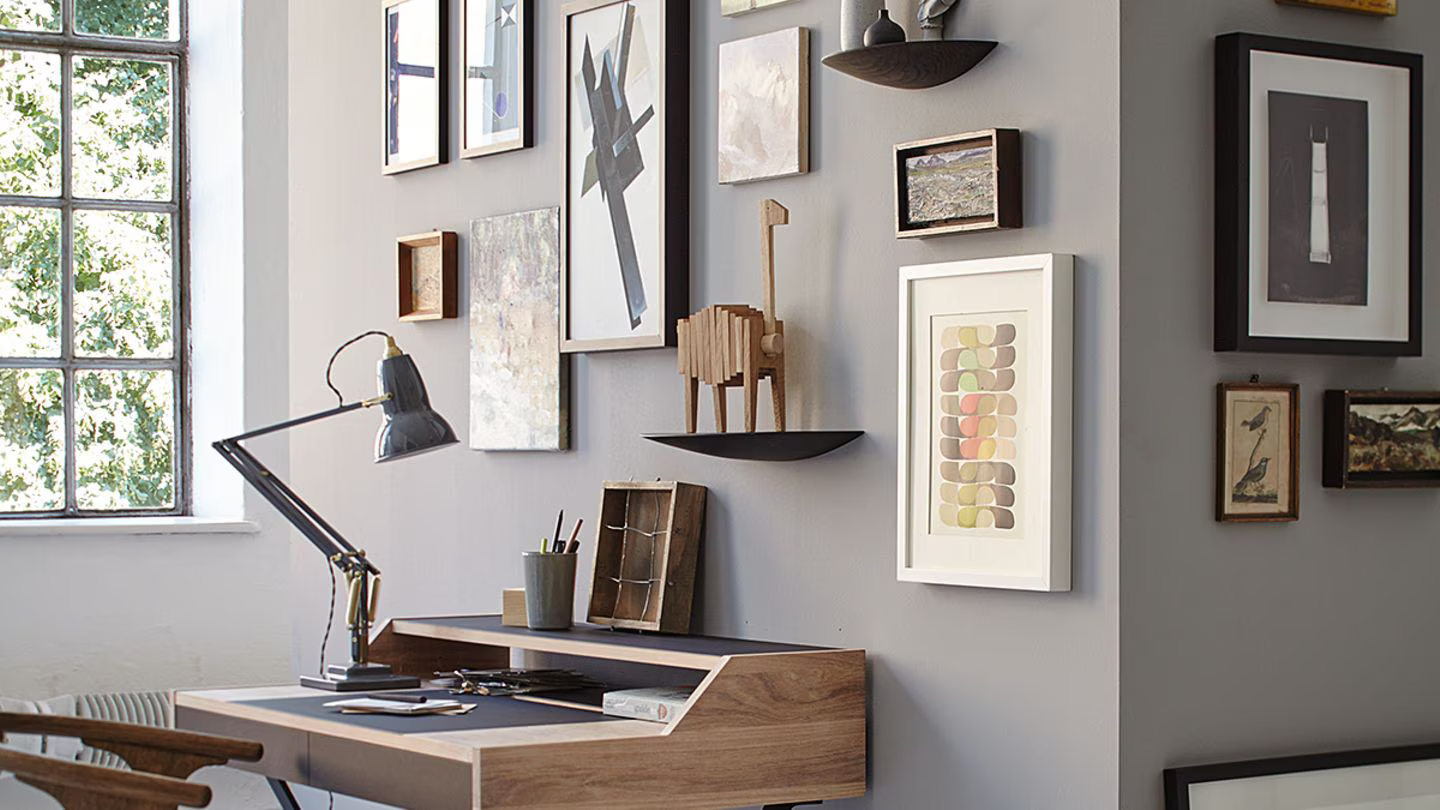
Collage
A creative way to decorate your walls: Postcards, photos, drawings, or souvenirs are combined into a personal work of art, either directly on the wall or mounted on a backing board.
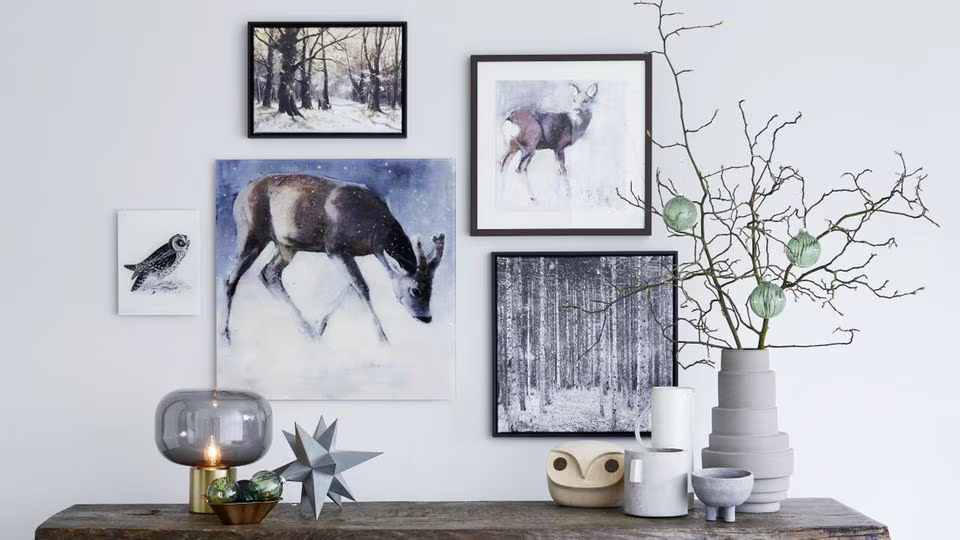
Grid Hanging
Strict, clear, and geometric: Frames of the same size are hung at identical intervals on a grid. This technique is especially suitable for series or related thematic motifs.
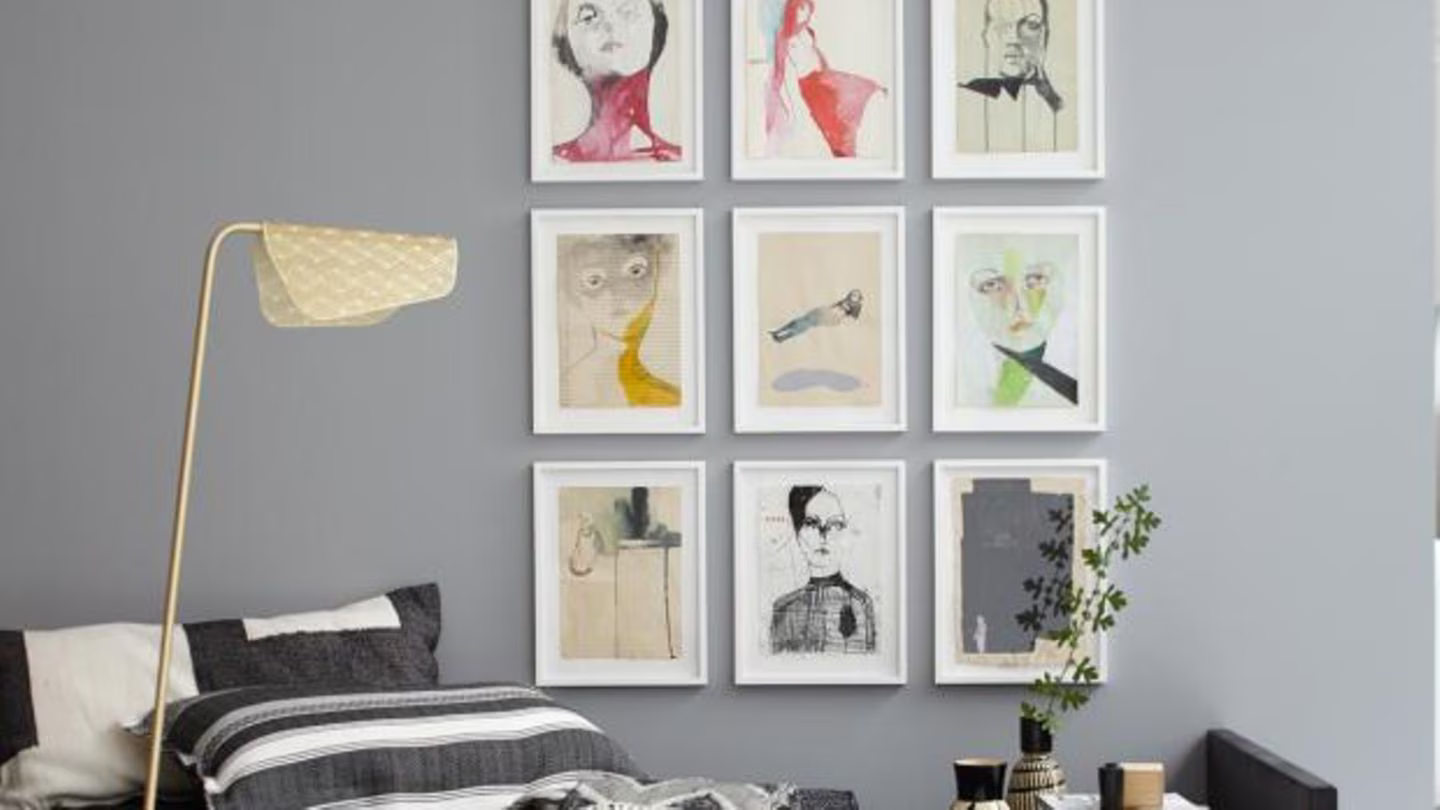
Hanging Within Lines
Here, the outer shape is what counts: The images follow an imaginary boundary (for example, a circle or a rectangle), without fixed distances or axes. Start with the largest image in the center.
Triptych: One Image, Several Panels
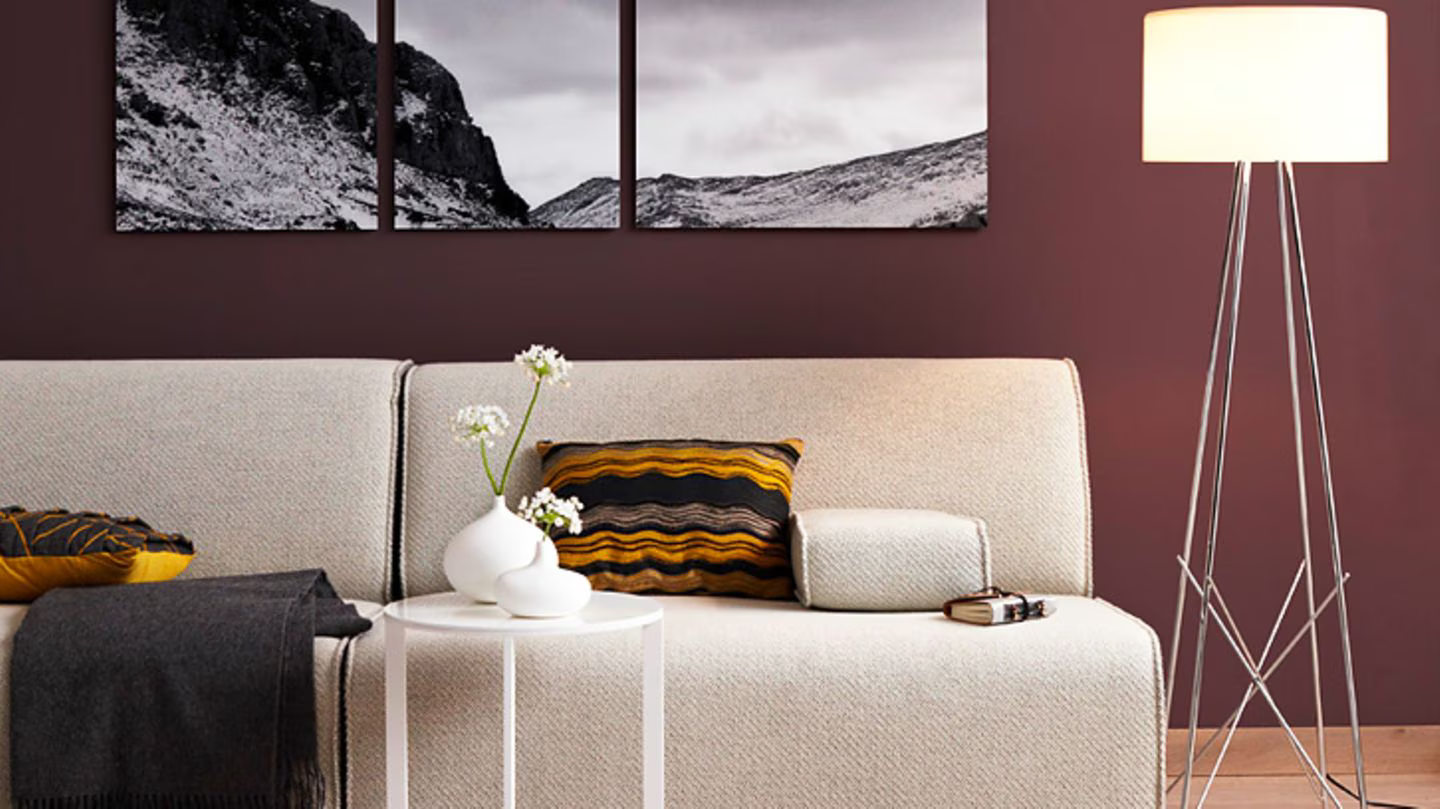
Pictures with multiple panels are most effective when the individual elements are hung together and, if possible, in a straight line. This creates a stunning panoramic effect.
You can buy original wall decorations at: Wall Decorations