Cookie preferences
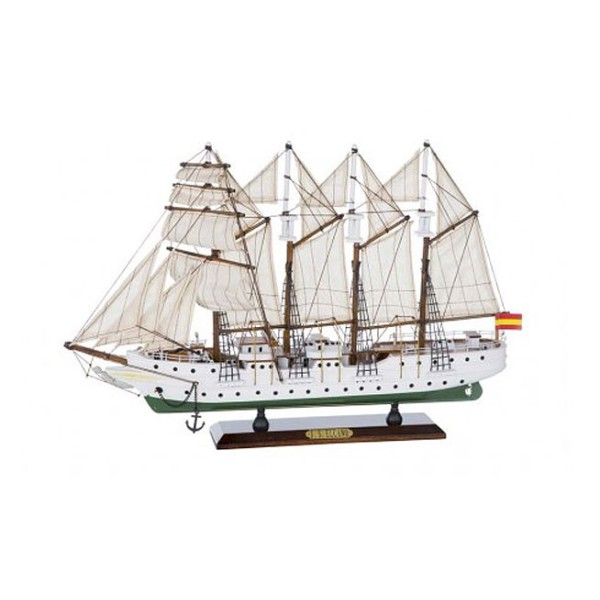
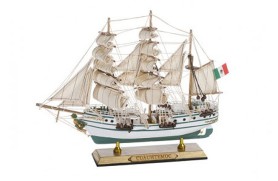
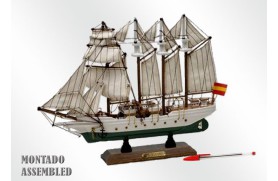
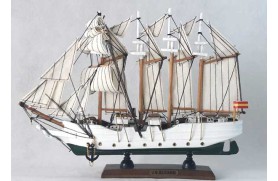
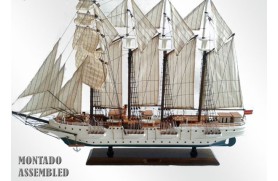
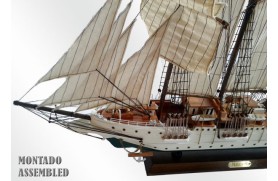
J.S. El cano
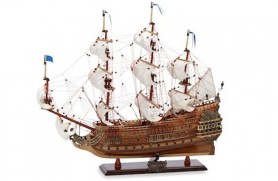
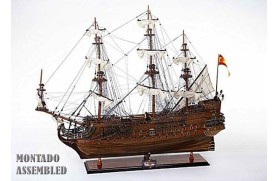
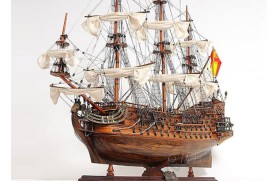
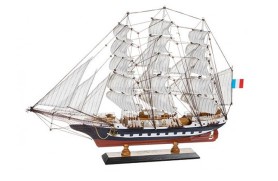
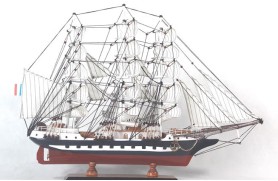
Valuable model that decorates both his home as an office, and is a memorable gift that lasts through time. High quality construction with materials, with emphasis on small details. Measure also the shelf or place where you plan to put this beautiful reproduction, are larger than they appear.
FULLY ASSEMBLED MODEL
 100% SECURE PAYMENT
You can make the payment fully secure through BANCO SANTANDER or Paypal.
 Delivery conditions
SHIPMENTS 24-48H Immediate shipping on most of our products. Maximum period of 72h.
 Return Policy
You have 15 days to exercise the right of withdrawal and return the product without penalty.
Data sheet

History
The boat building project was born with a Royal Decree of April 17, 1925, targeting a budget for 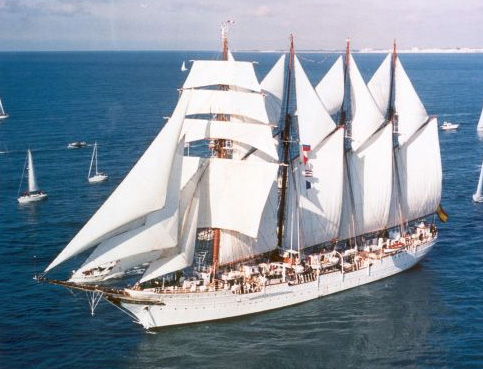 this 7,569,794 pesetas to replace its predecessor, the training ship Minerva. He took the name Juan Sebastian de Elcano in memory of the illustrious mariner Basque. Its launching took place on March 5, 1927 to be his godmother Carmen Primo de Rivera, daughter of the Prime Minister.
On February 29, 1928 makes its inaugural trip between Cadiz and Malaga, except carrying a passenger, King Alfonso XIII. From there he left for Seville where Expo was being held, arousing the admiration of many visitors.
His first transoceanic voyage round the world was in the opposite direction to the route Magellan-Elcano. Since then he has made nine other cruises like eighty instruction, covering nearly two million nautical miles for all the world's seas. It has trained generations of naval officers of the Navy, sailing with the wind and aided by the sextant and compass.
Also, Elcano has participated in countless parades and regattas throughout its long existence, leaving clear evidence of their seafaring qualities. Among the major transoceanic race include the Lisbon-Bermuda 1964, 1966 between Bermuda and Newport, the Great Race and the Great Race Colón'92 2000. Of the numerous trophies and awards achieved, perhaps the most important is the Boston Teapot, awarded by the Sail Training Association in 1974. This distinction is awarded annually to get the largest sailboat on a great circle distance between two points on the earth in 124 hours.
In his long career, the ship has weathered many storms in all its many manifestations (pamperos, cyclones, hurricanes, typhoons, monsoons, etc..), Battling waves of fifteen meters high and winds of more than hundred miles time. Stories told by their commanders in his chronicles that could well be in the best adventure stories.