 Cookie preferences

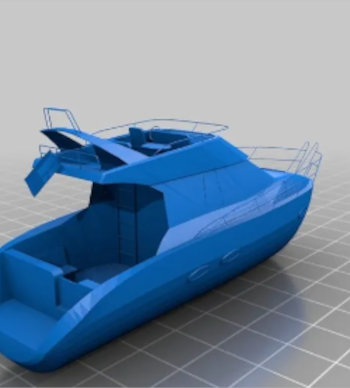

Building model ships with 3D printing
Our more than 40 years of naval experience combined with the new technological challenges of 3D printing. Our vision for the future of 3D printing in naval model making today.
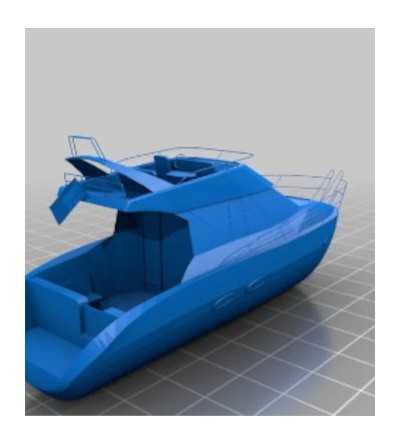
SHIP MODELING AND 3D PRINTING
As experts in ship modeling for over 40 years, we have explored the possibilities of using new technologies such as 3D printing.
Here, we will focus on the manufacture of modern ships, that is, replicas of ships from the 19th century onward, when ships were already being built from steel and other polymers. Previously, ships were made of wood, and therefore, replicas must also be made of wood.
For the manufacture of a model, whether it's a sailboat, a motor yacht, a merchant ship, or any other type of vessel, there are two distinct parts: the hull and the rest of the ship. The rest refers to masts, sails, all the elements of the ship's deck, anchors, chains, etc.
The tests we carried out were to replicate the ship's hull; in our case, we tested it with a Beneteau Oceanis 411 model.
We had a meeting with a company in Barcelona, Spain, specializing in 3D printing of components, and we also had contact with expert engineers from HP, located in Sant Cugat del Vallès.
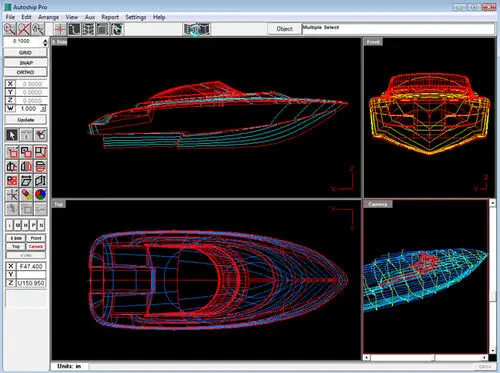
The first thing they told us is that to print anything, a G-code file (.gcode) is necessary, which gives the printer instructions on what to print and how to do it. To obtain this file, it is necessary to use design programs that generate .stl files, which are then converted to .gcode. There are three ways to create the design and obtain the .stl file:
- Do it manually using the shipyard's plans, entering all the hull dimensions, and meshing the final result.
- Importing plans from other software like AutoCAD or similar. Imports are never perfect due to minor corruption and/or language differences between programs, requiring a manual review of the final design.
- Creating an initial wooden model by one of our modelers and scanning the hull with a 3D scanner. Again, 3D scanners aren't perfect, and a manual review of the final result is necessary.
It's also important to keep in mind, although not common with boat hulls, that 3D printers sometimes need to print additional reinforcement areas for certain parts. This is necessary when a very fragile piece is required, but again, that's not our case.
Now we also need to decide whether we want to manufacture a single unit or a series (for example, 30 units). If we want to manufacture a single unit, the first option is very expensive, as it involves more than a month of work by one person meshing the hull. As you can imagine, the cost could be around €3,000 for this work alone, according to experts.
The third option seems pointless, since if we've already crafted the hull manually, there's no point in printing it, right?
So we're left with the second option, assuming we already have the plans in file format. However, it's worth noting that not a single shipyard provides plans for their models (not even for a fee). At most, they'll send you a plan and/or side view in PDF format. Therefore, this option is also quite complicated.
If we were to build a series of boats, we could consider option 1 or option 3. We've already discussed the first option; the third option, 3D scanning a model we've made ourselves out of wood, would cost €2,000 (according to experts).
In our experiment, we scanned a wooden hull we had made of the Beneteau Oceanis 411 using a 3D printing company. We brought them the wooden model, and after 40 days they told us they had completed the 3D scan. They had to dedicate many hours to retouching the hull mesh because the scanner wasn't perfect (if the final result isn't perfect, it doesn't meet our desired quality). They told us the cost would be €3,500.
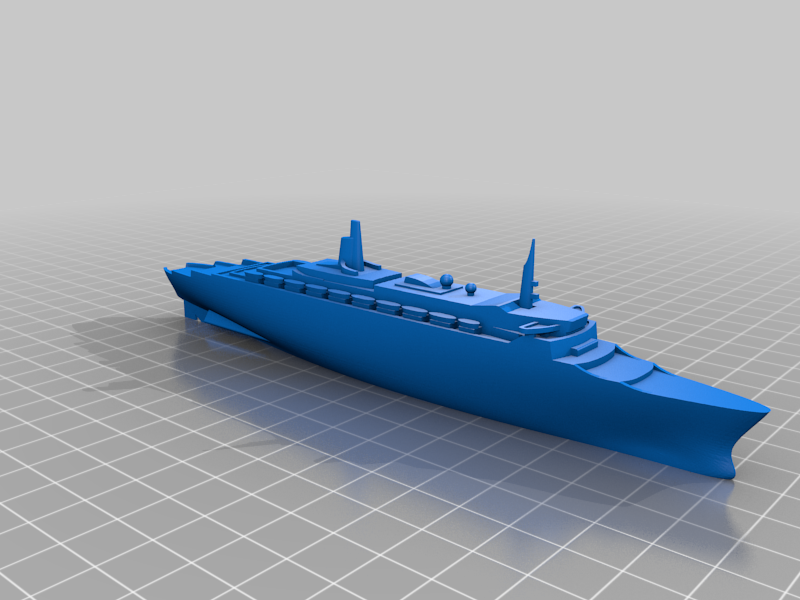
Once the .gcode file was ready, they did a test print and gave us the final result.
The result was that the hull had many imperfections, which we had to manually correct with our modelers.
The conclusion of the test is that the final printed result requires so much work to correct imperfections that, currently, it's still much more economical and efficient to produce replicas in series using silicone molds and resin baths.
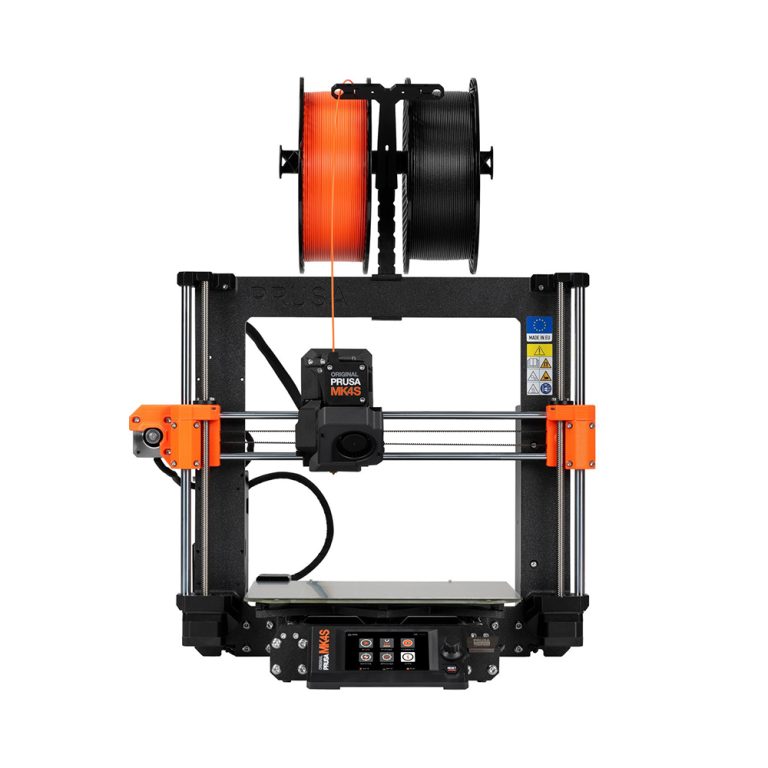
We hope that the technology will improve further so we can use 3D printing in our work.