Cookie preferences
- On sale!
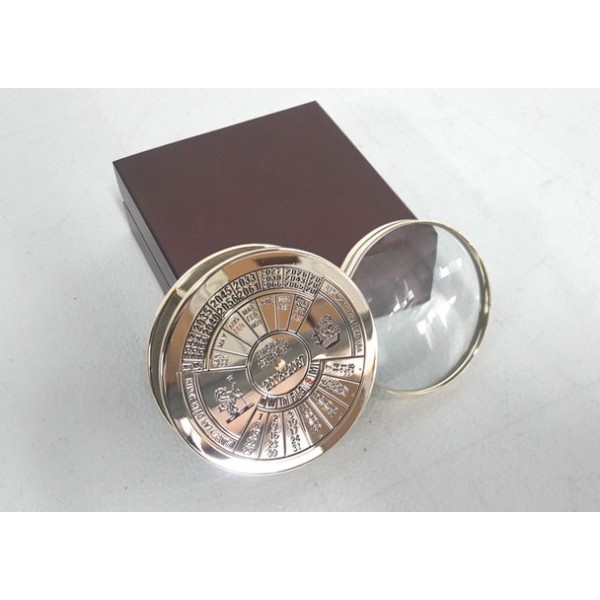
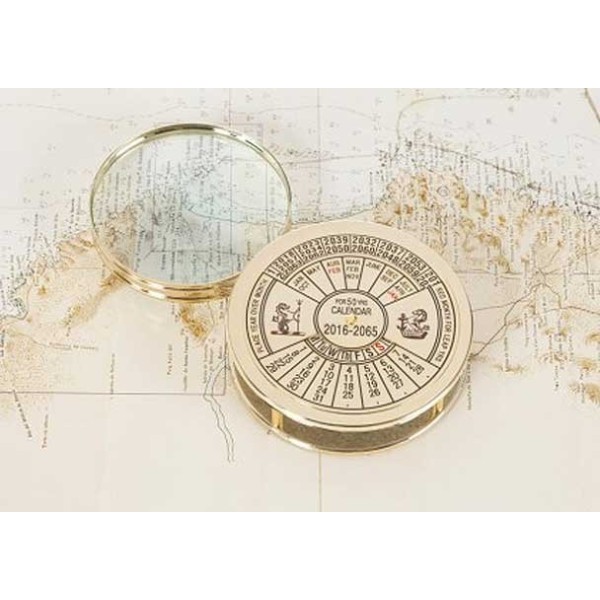
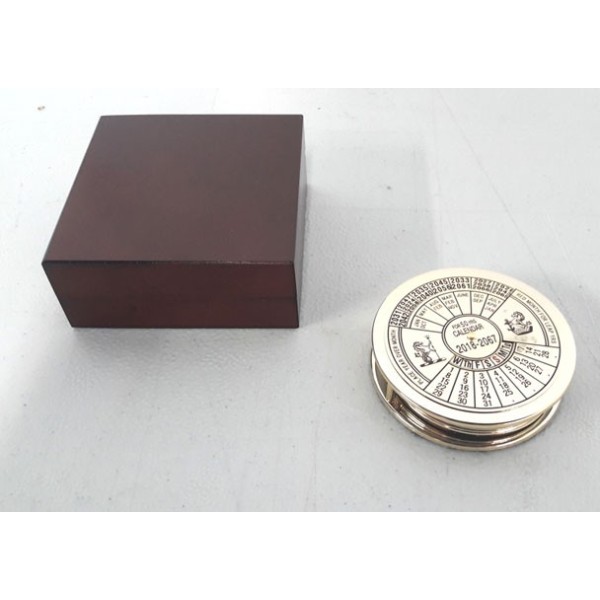
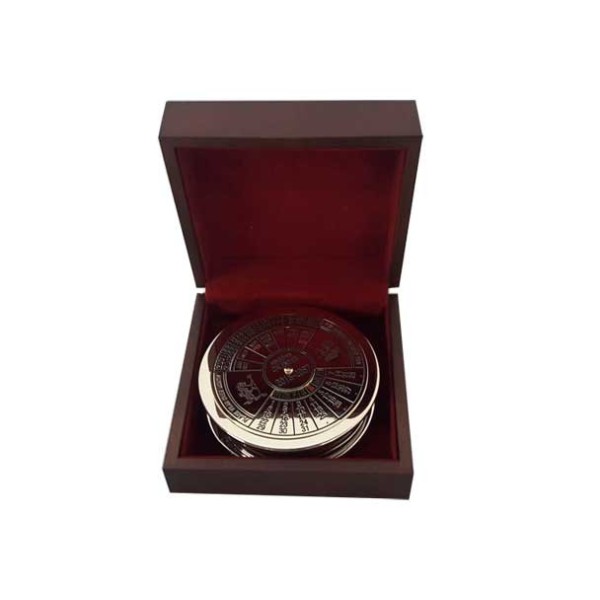
Perpetual Calendar
The perpetual calendar is a simple system to easily determine the day of the week of any date we select.
The perpetual calendar is a simple system to easily determine the day of the week of any date we select.
 100% SECURE PAYMENT
You can make the payment fully secure through BANCO SANTANDER or Paypal.
 Delivery conditions
SHIPMENTS 24-48H Immediate shipping on most of our products. Maximum period of 72h.
 Return Policy
You have 15 days to exercise the right of withdrawal and return the product without penalty.
History and Functioning of the Perpetual Calendar
The perpetual calendar is one of the most sophisticated complications in watchmaking. It is a mechanism that accurately displays the date, day of the week, month, and often leap year, for decades without the need for manual correction. Unlike an annual or four-year calendar, the perpetual calendar takes into account the varying lengths of months, as well as February 29th in leap years, thus replicating the Gregorian calendar system almost perfectly. [ziffernblatt.net] The origins of this complication date back to the 18th century. Around 1764, the English watchmaker Thomas Mudge developed the first pocket watch with a perpetual calendar. Later, in 1925, Patek Philippe presented the first wristwatch with a perpetual calendar, a milestone in the history of watchmaking. Since then, numerous manufacturers such as Audemars Piguet, Blancpain, and IWC have refined this technology. The perpetual calendar designed by Kurt Klaus for IWC in 1985 is particularly famous: a mechanical program that will run virtually without intervention until the year 2499.
Technically, the perpetual calendar is based on a complex system of gears, levers, and springs. At its core are the so-called program wheels, which control the variable length of the months and the leap year cycle. Every four years, an extra day is automatically added to February. Some systems even display the lunar phase and the current leap year. However, the name "perpetual" is somewhat misleading: most mechanisms will need to be corrected in the year 2100, as this is not a leap year according to the rules of the Gregorian calendar.
The fascination of the perpetual calendar lies not only in its precision but also in its symbolic significance: it translates humanity's complex system of timekeeping onto the face of a watch. Although electronic systems could easily perform this task today, the mechanical perpetual calendar remains a masterpiece of traditional engineering: a combination of mathematics, astronomy, and craftsmanship perfected over centuries.

Data sheet